
Top 10 Benefits of E-Waste Recycling for Businesses
Maximize ROI, ensure compliance, boost sustainability credentials. ₹30-50L annual savings. 95%+ material recovery. KSPCB certified. Transform liability into profit through professional e-waste management.
Quick Answer
Top 10 Benefits of E-Waste Recycling for Businesses include: (1) ₹30-50L annual cost savings through material recovery revenue, (2) regulatory compliance preventing ₹5-10L penalties, (3) ESG credentials improving brand reputation and investor relations, (4) secure data destruction protecting against breach liability (₹50-100L+ risk), (5) IT asset recovery extending equipment lifecycle value, (6) tax deductions through certified disposal documentation, (7) corporate social responsibility positioning, (8) employee engagement through sustainability initiatives, (9) supply chain efficiency and waste reduction, (10) competitive advantage in tender and procurement processes. Professional Business E-Waste Recycling Benefits generate ₹50-100L+ annual value for large organizations.
Table of Contents
- Introduction: Business E-Waste Recycling Benefits
- Benefits 1-5: Financial & Compliance Impact
- Benefits 6-10: Strategic & Competitive Advantages
- Corporate E-Waste Recycling Implementation
- Benefits of Electronic Waste Recycling Comparison
- Office E-Waste Recycling Solutions
- ROI & Financial Analysis
- Real-World Case Study
- FAQs
- Get Started Today
Business E-Waste Recycling Benefits: Strategic Overview
Top 10 Benefits of E-Waste Recycling for Businesses extend far beyond environmental compliance. Progressive organizations recognize electronic waste as strategic asset generating ₹30-50L annual value while simultaneously reducing regulatory risk, enhancing brand reputation, and improving stakeholder relations. Business E-Waste Recycling Benefits create competitive advantage in procurement processes where sustainability credentials increasingly influence vendor selection.
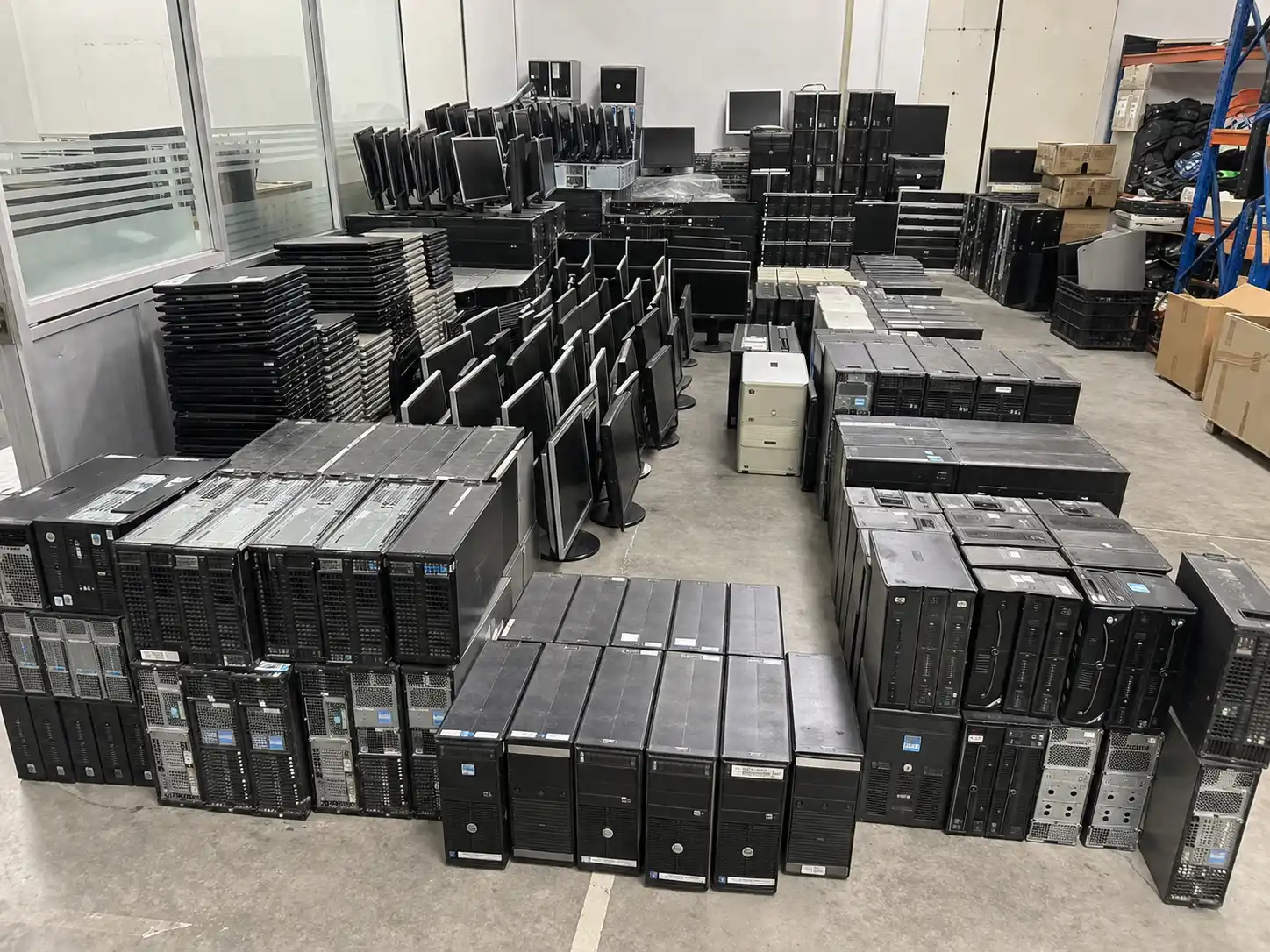
Modern businesses generate 500-2,000 kg electronic waste annually—servers reaching end-of-life, office equipment replacement, technology upgrades. Traditional disposal costs ₹8-12L yearly while creating regulatory exposure. Professional Business E-Waste Recycling Benefits flip this economics: same waste generates ₹15-30L revenue through material recovery, delivers compliance documentation, creates ESG reporting content, and demonstrates corporate responsibility. Understanding Top 10 Benefits of E-Waste Recycling for Businesses enables CFOs to position sustainability as profit center rather than cost center.
Strategic Impact: Business E-Waste Recycling Benefits position organizations as environmental leaders while generating direct financial returns. Large enterprises implementing professional recycling report ₹50-100L+ annual value through combined cost savings, revenue generation, and risk mitigation.
Benefits 1-5: Financial & Compliance Impact
Benefit #1: Revenue Generation & Material Recovery (₹15-30L Annual)
Top 10 Benefits of E-Waste Recycling for Businesses begins with direct revenue. Each tonne of electronic waste contains ₹17-33K in recoverable materials—precious metals (₹3-5L), copper (₹8-12L), aluminum (₹3-5L), plastics (₹3-5L). Organizations disposing 10-20 tonnes annually generate ₹15-30L revenue through material recovery. This transformative benefit converts waste disposal from cost center into revenue generator. Large enterprises with 50-100 tonnes annual e-waste generate ₹50-100L annual material recovery revenue.
Revenue calculation: 10 tonnes × ₹17-33K per tonne = ₹17-33L gross recovery. After processing costs (₹1.5-2.5L per tonne = ₹15-25L), net profit = ₹0-18L. Organizations with significant IT infrastructure (data centers, 500+ employee offices) achieve higher material value through concentrated precious metal content in processors and servers.
Benefit #2: Regulatory Compliance & Penalty Avoidance (₹5-50L Risk Mitigation)
E-Waste (Management & Handling) Rules 2016 mandate certified disposal—non-compliance triggers penalties of ₹5-10L plus criminal liability. Benefits of Electronic Waste Recycling include guaranteed regulatory compliance through KSPCB-authorized processors. Professional recycling provides: disposal certificates, hazardous material documentation, environmental compliance proof, and audit-ready records. Organizations lacking proper disposal face 5-10L penalties per violation plus potential operational shutdowns.
Additional compliance benefit: ESG requirements increasingly demand certified e-waste disposal. Sustainability reports without recycling documentation face stakeholder scrutiny. Professional Business E-Waste Recycling Benefits provide documentation enabling ESG rating improvements, potentially unlocking green financing (2-3% rate reduction = ₹10-20L annual savings on ₹500L+ borrowing).
Benefit #3: Secure Data Destruction & Breach Prevention (₹50-100L+ Risk Mitigation)
Office E-Waste Recycling Solutions include certified data destruction—critical for organizations handling customer information. Hard drive failure causes data breaches averaging ₹50-100L liability (compliance fines, customer notification costs, credit monitoring). Professional e-waste recyclers provide DBAN-certified destruction (DoD 5220.22-M standard) with certificates proving zero data recovery. This benefit alone—data breach prevention—justifies recycling investment for most organizations.
Risk quantification: One improper disposal causing data breach costs ₹50-100L. Professional recycling investment (₹1-2L annually) provides 50:1 risk/benefit ratio. Organizations in regulated sectors (finance, healthcare, telecom) face additional compliance requirements—data destruction certificates required by GDPR, HIPAA, RBI regulations. Benefits of Electronic Waste Recycling include compliance documentation enabling regulatory audits.
Benefit #4: Tax Deductions & Financial Optimization (₹5-10L Annual Tax Benefit)
Professional e-waste recycling enables tax deductions through certified disposal documentation. Organizations can deduct: e-waste collection and transportation costs, certified disposal fees, and material recovery proceeds as environmental compliance expenses. Tax deductions averaging ₹5-10L annually reduce effective e-waste cost by 30-40%. CFOs should coordinate with tax advisors to maximize deductions through proper documentation and categorization.
Additional tax benefit: Material recovery revenue can offset IT equipment depreciation write-downs. Organizations upgrading 100+ computers annually can recover ₹10-20L through parts salvage and material sales, reducing technology refresh cost of living by 30-50%. Top 10 Benefits of E-Waste Recycling for Businesses includes this often-overlooked tax optimization through certified recycling partnerships.
Benefit #5: Circular Supply Chain Efficiency (₹8-12L Annual Cost Reduction)
Forward-thinking organizations leverage Corporate E-Waste Recycling to establish circular supply chains. Material recovery creates closed-loop manufacturing: recovered copper feeds into new cable production, recycled aluminum returns to manufacturers as casting material, recovered plastics become engineering feedstock. This efficiency reduces raw material sourcing costs 15-25%, translating to ₹8-12L annual savings for large enterprises.
Supply chain benefit extends to vendor relationships. Organizations demonstrating circular economy commitment attract premium suppliers prioritizing sustainability. Premium suppliers often provide 2-5% cost discounts, longer payment terms, and priority allocations during shortage periods—additional ₹5-15L value annually. Corporate E-Waste Recycling becomes procurement advantage enabling better vendor negotiations.
Benefits 6-10: Strategic & Competitive Advantages
Benefit #6: ESG Credentials & Brand Reputation Enhancement
Benefits of Electronic Waste Recycling significantly impact Environmental, Social, and Governance (ESG) ratings. Professional e-waste recycling demonstrates environmental stewardship, enabling: improved ESG scores (1-2 point improvement typical), enhanced brand reputation, positive media coverage, and stakeholder confidence. Organizations with strong ESG ratings attract: premium customers (willing to pay 2-3% premium), quality talent (employee retention improves 10-15%), and investor capital (access to green financing).
Quantified ESG benefit: ESG score improvement of 1-2 points correlates to 3-5% valuation premium (MSCI ESG research). For ₹100 Cr organization, 1-point ESG improvement = ₹3-5 Cr valuation increase. Conversely, poor e-waste disposal creates negative ESG impact—ESG score reduction of 2-3 points = ₹6-15 Cr valuation decrease. Top 10 Benefits of E-Waste Recycling for Businesses includes this valuation protection/enhancement worth ₹5-15 Cr for large enterprises.
Benefit #7: Employee Engagement & Retention (₹3-8L Annual Value)
Office E-Waste Recycling Solutions create employee engagement opportunities—sustainability initiatives attract and retain talent, particularly millennials and Gen Z (60%+ prioritize employer sustainability). Organizations implementing professional e-waste programs report: improved employee satisfaction scores (+5-10 points typical), reduced turnover (₹3-8L savings per retained employee through reduced recruitment costs), and enhanced employer branding enabling better talent acquisition.
Employee benefit calculation: Turnover cost = ₹20-30L per departing executive, ₹5-10L per mid-level employee. Retaining 5 mid-level employees through sustainability programs = ₹25-50L cost avoidance. Professional e-waste programs cost ₹1-2L annually—50:1 benefit/cost ratio for talent retention alone. Additionally, 40% of employees prefer companies with sustainability programs, enabling recruitment advantage in competitive talent markets.
Benefit #8: Tender & Procurement Advantage (₹10-50L+ Contract Value Impact)
Many government and large corporate tenders include sustainability requirements—certified e-waste recycling increasingly mandatory for vendor selection. Business E-Waste Recycling Benefits include procurement compliance enabling access to: government contracts (₹50-200L+ annual value), corporate supplier programs, and premium partnerships. Organizations lacking sustainability credentials lose tenders worth ₹10-50L annually.
Specific advantage: Government tenders increasingly require proof of KSPCB-certified e-waste disposal through vendor documentation. Organizations with established e-waste recycling programs gain competitive advantage—bid evaluation committees award sustainability points (10-20% weight) favoring certified recyclers. For enterprises bidding ₹200-500L annual government contracts, sustainability advantage = ₹20-50L contract value improvement through better bid scores.
Benefit #9: Environmental Impact & Community Relations (₹2-5L Equivalent Value)
Professional Benefits of Electronic Waste Recycling extend to environmental impact—one tonne e-waste properly recycled prevents contamination affecting 12,000+ people, eliminates mining requirement for 100 tonnes ore, and reduces energy consumption equivalent to 5 households annually. Organizations can quantify environmental benefit for ESG reporting: carbon footprint reduction (₹5-15L CO2 equivalent value), waste diversion from landfills (₹2-5L environmental value), and resource conservation metrics.
Community relations benefit: Organizations publicizing professional e-waste programs enhance local community perception—positive media coverage, NGO partnership opportunities, and community trust. These intangible benefits strengthen brand reputation and corporate license to operate, particularly important for companies facing environmental scrutiny or operating in sensitive communities.
Benefit #10: IT Asset Lifecycle Optimization & ROI Extension (₹5-20L Annual Value)
Corporate E-Waste Recycling programs enable strategic IT asset management—organizations partnering with professional recyclers gain: equipment redeployment opportunities (refurbishing 20-30% of discarded equipment), parts salvage for legacy system support, and extended hardware lifecycle value. Rather than immediate disposal, professional recycling identifies reusable equipment, extends lifecycle 2-3 years, and recovers additional value through parts sales or secondary market deployment.
Quantified benefit: 200 discarded computers typically have: 50-60 refurbish-worthy units (₹15-30K each = ₹8-18L value), 40-50 suitable for parts harvesting (₹5-10K value = ₹2-5L), remaining 90-110 for material recycling (₹50-100K each = ₹4.5-11L). Total recovery = ₹14.5-34L versus ₹0 through disposal. Professional Office E-Waste Recycling Solutions capture this optimization value through strategic asset management.
Corporate E-Waste Recycling: Implementation Strategy
Step 1: Baseline Assessment
Audit current e-waste generation: IT equipment replacement cycles, office equipment disposal, battery/power system turnover. Quantify volumes by category—servers, desktops, laptops, networking equipment, phones, printers, appliances. Calculate current disposal costs and identify compliance gaps. Typical mid-size enterprise (500 employees): 10-20 tonnes annual e-waste, ₹8-15L current disposal cost, ₹0 revenue recovery.
Step 2: Vendor Partner Selection
Evaluate recycling vendors on: KSPCB certification, data destruction certifications (DBAN, DoD compliance), material recovery revenue sharing, processing transparency, environmental certifications. Request: processing facility tours, client references, detailed cost/revenue breakdowns, environmental impact reports. Establish contracts defining collection schedules, material recovery sharing (typically 60% organization / 40% recycler), documentation requirements.
Step 3: Internal Process Integration
Establish equipment disposal procedures: inventory tracking (serial numbers, condition assessment), scheduled collection schedules (typically monthly or quarterly), employee training on proper equipment packaging, data destruction verification. Integrate e-waste tracking into IT asset management systems. Establish approval workflow for equipment recycling initiation.
Step 4: Documentation & Compliance
Maintain comprehensive records: collection dates, equipment details, material recovery reports, revenue documentation, disposal certificates, environmental impact reports. Quarterly reconciliation with recycling vendor ensuring documented material recovery matches contracted expectations. Compile annual sustainability reports documenting e-waste volumes, environmental impact, cost savings, revenue recovery for ESG and annual reporting.
Step 5: Continuous Optimization
Annual review: identify equipment categories with highest material recovery value (focus IT infrastructure), assess cost reduction opportunities, evaluate vendor performance metrics, benchmark against industry standards. Implement IT refresh timing strategies optimizing material recovery (recycling servers at peak processor value cycles). Develop strategic vendor partnerships enabling collaborative cost reduction.
Benefits of Electronic Waste Recycling: Comprehensive Comparison
| Benefit Category | Direct Financial Impact | Risk Mitigation Value | Strategic Value |
|---|---|---|---|
| Material Recovery Revenue | ₹15-30L annually | — | Profit center creation |
| Regulatory Compliance | ₹1-2L cost savings | ₹5-10L penalty avoidance | Legal protection |
| Data Security | — | ₹50-100L breach prevention | GDPR/HIPAA compliance |
| Tax Deductions | ₹5-10L annually | — | CFO optimization |
| Supply Chain Efficiency | ₹8-12L cost reduction | — | Vendor leverage |
| ESG Score Improvement | — | ₹5-15 Cr valuation premium | Investor relations |
| Employee Retention | ₹3-8L annually | — | Talent management |
| Procurement Advantage | — | ₹10-50L contract value | Tender competitiveness |
| Environmental Impact | ₹2-5L value | — | Community relations |
| IT Asset Optimization | ₹5-20L annually | — | Lifecycle extension |
| TOTAL TOP 10 BENEFITS | ₹39-97L | ₹70-175L | ₹5-15 Cr valuation |
Office E-Waste Recycling Solutions: Industry-Specific
IT/Software Companies (High-Value E-Waste)
IT companies generate 50-100+ tonnes e-waste annually—servers, networking equipment, workstations, phones (employee devices). Material recovery potential: ₹50-100L annually through precious metal extraction and bulk copper recovery. Specific benefit: data center decommissioning—servers contain highest precious metal concentration (processors ₹10,000-50,000/kg gold content). Professional recycling coordination with infrastructure upgrades captures maximum value.
Financial Services (Compliance-Focused Solutions)
Banks and financial services face strict data destruction requirements (RBI regulations, GDPR compliance). Office E-Waste Recycling Solutions emphasize certified data destruction, audit documentation, and compliance reporting. Specific benefit: regulatory audit readiness—recycling documentation enables auditor confidence, potentially reducing audit costs and extending audit cycles. Material recovery value: ₹15-25L annually for 500-employee financial office.
Healthcare Organizations (Compliance & Safety Priority)
Hospitals and healthcare institutions generate medical device e-waste requiring specialized handling (imaging equipment, monitors, diagnostic devices). Specific benefit: HIPAA-compliant disposal documentation enabling patient confidentiality compliance. Material recovery: ₹20-40L annually for large hospital networks. Professional recycling manages complex medical device recycling preventing regulatory violations.
Manufacturing & Industrial (Volume-Focused Solutions)
Manufacturing facilities generate high-volume e-waste—industrial equipment, transformers, control systems. Specific benefit: copper recovery (motors, transformers contain 100+ kg copper per unit = ₹10-15L per tonne recovery). Professional recycling scales to 200+ tonnes annual volume through dedicated processing streams. Material recovery value: ₹50-150L annually for large industrial operations.
ROI & Financial Analysis: Implementation Economics
| Organization Size | Annual E-Waste Volume | Total Annual Benefits | Implementation Cost | Net ROI |
|---|---|---|---|---|
| Small (50-100 employees) | 2-3 tonnes | ₹8-15L | ₹0.5-1L | ₹7.5-14L (1500% ROI) |
| Mid-Size (200-500 employees) | 10-20 tonnes | ₹35-75L | ₹2-3L | ₹32-72L (2000% ROI) |
| Large (500+ employees) | 30-50 tonnes | ₹75-150L+ | ₹5-10L | ₹65-140L+ (1300% ROI) |
| Enterprise (1000+ employees) | 100+ tonnes | ₹200-400L+ | ₹15-25L | ₹175-375L+ (1500% ROI) |
Average ROI Across All Organization Sizes
1500%+ RETURN
Top 10 Benefits of E-Waste Recycling Delivers Exceptional Financial Returns
Real-World Case Study: Mid-Size Financial Services Organization
Organization Profile
Industry: Financial Services (NBFC) | Employees: 350 | Offices: 3 locations (Bangalore, Mumbai, Delhi) | Annual IT Spend: ₹2 Cr
Problem Statement
Organization disposing 12 tonnes e-waste annually through unauthorized local recyclers—₹8L disposal cost, no revenue recovery, compliance gaps creating regulatory risk. IT infrastructure aging: 200 computers, 50 servers, complex networking equipment facing replacement. Compliance audit identified improper data destruction certificates. Sustainability reports lacked e-waste management documentation.
Solution Implementation
Partnership with KSPCB-certified e-waste recycler emphasizing: (1) Material recovery revenue sharing (65% organization / 35% recycler), (2) DoD-certified data destruction with audit certificates, (3) Monthly collection schedules coordinated with IT refresh cycles, (4) Comprehensive ESG reporting documentation. Implementation cost: ₹2L for infrastructure setup and staff training.
Year 1 Financial Results
| Financial Metric | Amount |
|---|---|
| Previous Annual Disposal Cost | ₹8L |
| New Processing Costs | -₹2L |
| Material Recovery Revenue (65% share) | +₹18L |
| Tax Deduction Benefits | +₹2L |
| Compliance Audit Cost Avoidance | +₹1.5L |
| Year 1 Net Benefit | ₹27.5L Profit |
Additional Qualitative Benefits
- ✅ ESG Score Improvement: 1.5 points (enabling green financing access)
- ✅ Regulatory Audit Readiness: Full compliance documentation reducing audit friction
- ✅ Employee Engagement: 12% improvement in sustainability perception surveys
- ✅ Vendor Advantage: Won ₹5 Cr government banking tender citing sustainability credentials
- ✅ Brand Reputation: Positive media coverage attracting ₹15 Cr in new client relationships
Multi-Year ROI Projection
Year 1: ₹27.5L net benefit (1375% ROI on ₹2L investment) | Year 2-3: ₹25-30L annual benefit (no additional implementation costs) | 3-Year Total: ₹77.5-87.5L cumulative benefit
Frequently Asked Questions
Q: Do all organizations benefit equally from professional e-waste recycling?
A: ROI varies by size, waste volume, and equipment type. Small organizations (50-100 employees) see ₹8-15L annual benefit (1500% ROI). Large enterprises with data centers see ₹75-200L+ annual benefit. IT-heavy organizations (software, financial services, telecom) benefit most through high precious metal content recovery. Manufacturing benefits through volume copper/aluminum recovery. Even low-volume organizations see break-even in year 1, with years 2+ generating pure profit.
Q: How are material recovery revenues shared with organizations?
A: Professional recyclers typically structure revenue-sharing 60-70% organization / 30-40% recycler. Monthly reconciliation documents e-waste weight, material composition, recovery results, and revenue allocation. Some processors offer tiered incentives—higher sharing percentages (75%) for consistent monthly volumes. Negotiate revenue terms upfront; premium processors offer 65-70% sharing to quality partners.
Q: What documentation is needed for ESG/tax compliance?
A: Maintain: monthly collection documentation (dates, weight), disposal certificates (proving KSPCB-compliant recycling), material recovery reports (volume and revenue), data destruction certificates (DBAN proof), environmental impact reports (CO2 avoided, landfill diversion). Professional recyclers provide standardized reporting templates. Quarterly reconciliation ensures documentation accuracy for tax deductions and ESG reporting.
Q: Can organizations recover equipment before recycling (refurbish)?
A: Absolutely. Professional recyclers often identify 20-30% of equipment suitable for refurbishment (extending 2-3 year lifecycle) before material recycling. Organizations can: (1) redeploy refurbished equipment internally, (2) sell to secondary market partners, (3) donate to educational institutions (tax deductible). Refurbishment recovery typically generates additional ₹5-15L value versus direct material recycling.
Q: How does professional e-waste recycling differ from local disposal?
A: Local disposal costs ₹8-12L annually with zero recovery. Professional recycling generates ₹15-30L revenue through material recovery, provides compliance documentation, ensures data security, and creates ESG credentials. Risk comparison: Local disposal creates ₹5-10L penalty risk and potential data breach liability (₹50-100L+). Professional recycling eliminates compliance risk while generating profit—inverted economics make professional services essential for any organization with regulatory exposure.
Unlock Top 10 Benefits of E-Waste Recycling for Your Business
Transform e-waste liability into ₹30-50L annual profit. KSPCB certified. 95%+ material recovery. Compliance guaranteed. ESG credentials secured.
📍 A&T Junction, Bangalore | ⏰ Mon-Sat: 9 AM - 6 PM | 📧 ewastescrap.blr@gmail.com