
How E-Waste Recycling Works
Complete lifecycle journey from electronic waste collection to precious metal recovery. 8 professional steps. 95%+ material recovery. Zero landfill. ₹17-33K value per tonne. KSPCB certified process.
Quick Answer
How E-Waste Recycling Works involves 8 systematic steps: (1) Collection and transportation of electronic waste, (2) Pre-sorting and hazard identification, (3) Disassembly of components, (4) Separation of materials (metals, plastics, glass), (5) Precious metal extraction, (6) Processing and purification, (7) Material sale to manufacturers, (8) Tracking and reporting. This process recovers 95%+ of material value—precious metals (₹3-5L/tonne), base metals (₹80-150/kg), engineering plastics (₹40-80/kg)—while preventing environmental contamination and generating ₹17-33K per tonne in economic value.
Table of Contents
What is E-Waste Recycling?
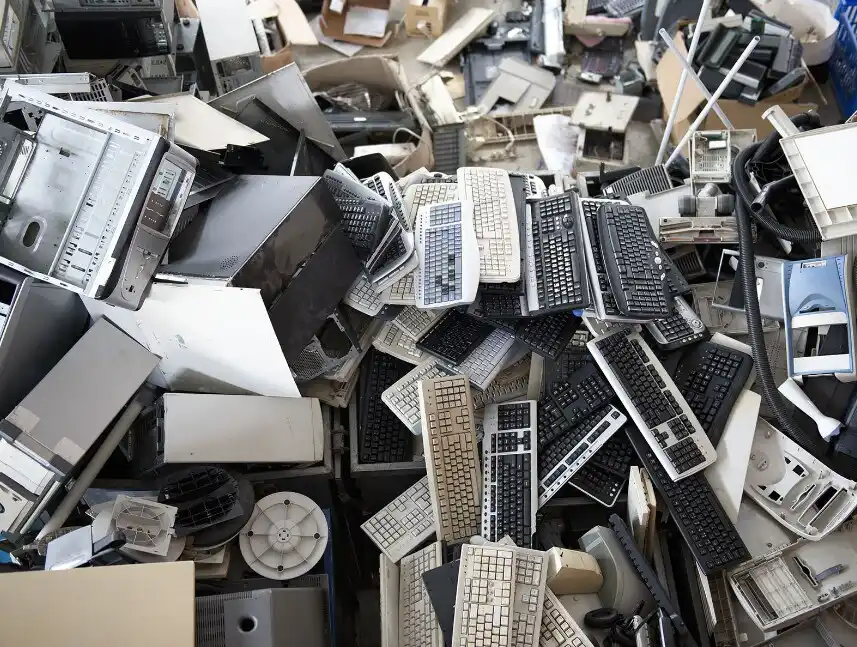
How E-Waste Recycling Works is a systematic process transforming discarded electronics—computers, phones, servers, equipment—into recoverable materials and valuable resources. E-waste recycling operates through professional facilities employing specialized equipment, trained technicians, and environmental protocols converting 95%+ of electronic waste into raw materials for manufacturing new products.
Understanding how E-waste recycling works reveals the circular economy in action: old equipment becomes precious metals (gold, silver, platinum), base metals (copper, aluminum, steel), engineering plastics, and glass. This transformation prevents environmental contamination while generating substantial economic value. Each tonne of electronics contains ₹17-33K in recoverable materials—far exceeding disposal costs.
Key Fact: One tonne of e-waste contains more precious metals than 100 tonnes of ore. How E-Waste Recycling Works recovers metals worth ₹3-5L per tonne while preventing toxic contamination affecting 12,000+ people per million tonnes improperly disposed.
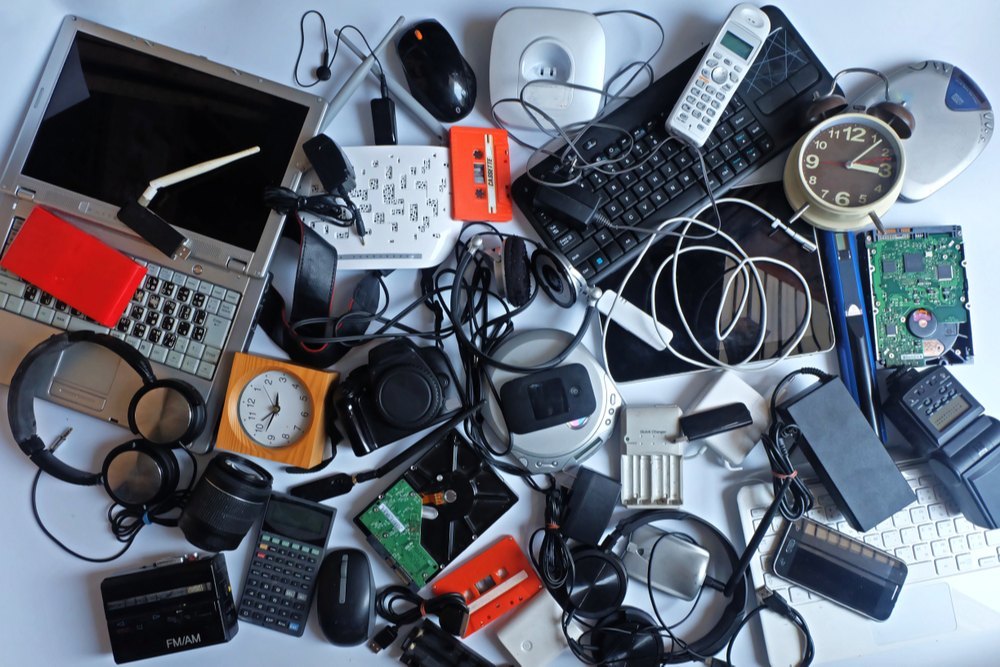
Electronic Waste Categories
- IT Equipment: Computers, laptops, servers, monitors, keyboards, mice, networking hardware
- Mobile Devices: Smartphones, tablets, feature phones, mobile phone accessories
- Large Appliances: Refrigerators, washing machines, air conditioners, ovens (contain CFCs requiring special handling)
- Small Appliances: Microwave ovens, toasters, kettles, hair dryers, chargers
- Industrial Equipment: Transformers, circuit breakers, switches, industrial controllers
- Power Backup Systems: UPS batteries, inverter batteries, solar panels, renewable energy equipment
- Communication Equipment: Telephones, fax machines, routers, switches, servers
Why E-Waste Recycling Matters
Environmental Impact
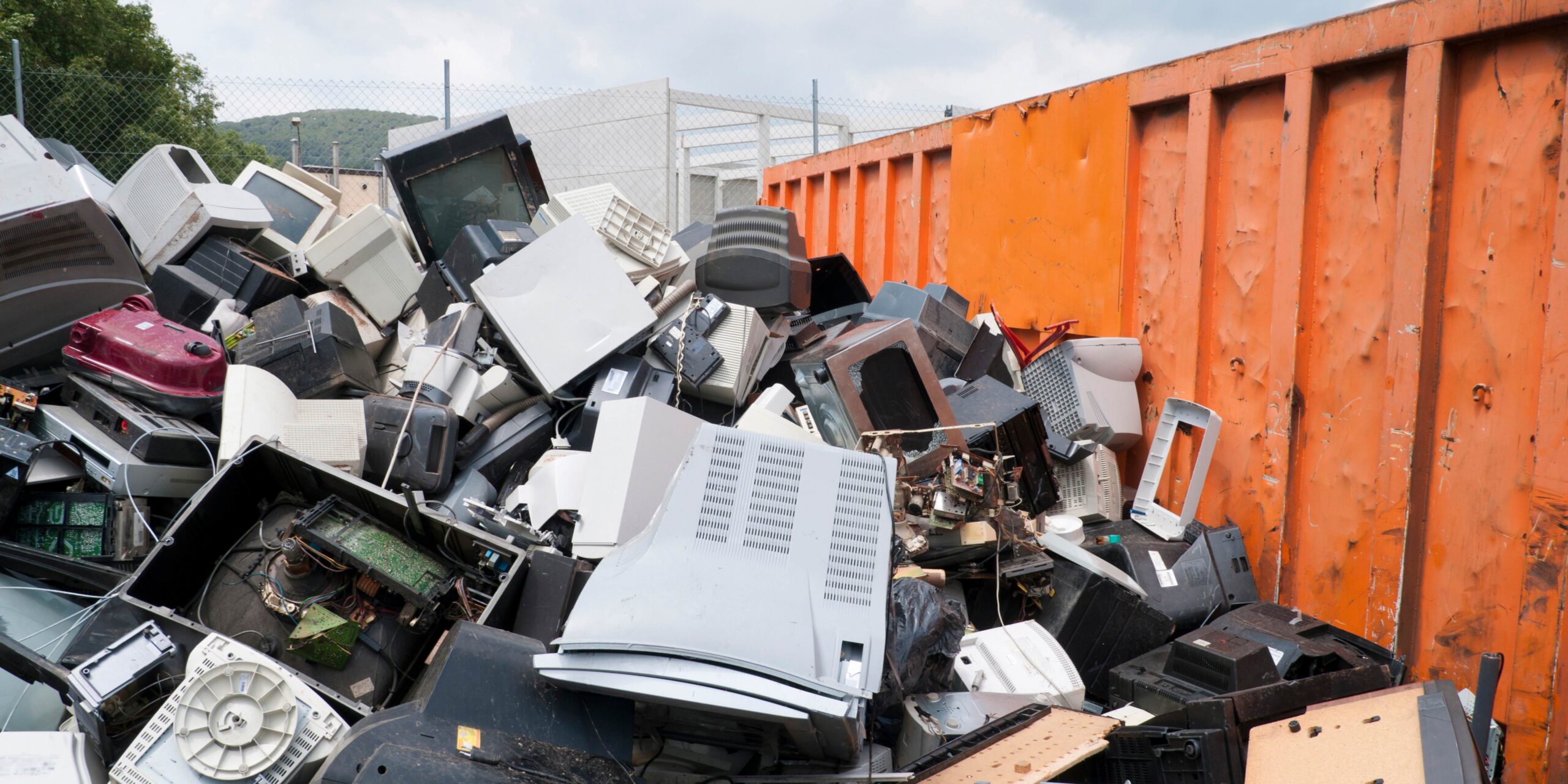
Improper e-waste disposal contaminates soil and water with hazardous substances—lead, mercury, cadmium, arsenic. Understanding how E-waste recycling works reveals the prevention mechanism: proper processing isolates hazardous materials before disposal, preventing 12,000+ premature deaths annually from contaminated water supplies. Professional recycling eliminates 98% of environmental contamination risk versus illegal dumping.
E-waste recycling reduces mining requirements. One tonne of recycled electronics eliminates need to mine 100 tonnes of ore. This conservation prevents: habitat destruction (50,000+ hectares annually), water pollution affecting agricultural regions, and greenhouse gas emissions from mining operations (₹2-5L per tonne environmental cost avoided).
Economic Value
Understanding how E-waste recycling works demonstrates profit generation. Each tonne contains ₹17-33K in recoverable materials—precious metals (₹3-5L), base metals (₹8-12L), plastics (₹3-5L), glass (₹1-2L). Organizations accessing professional recycling generate ₹10-30L annual revenue from material recovery while eliminating disposal costs of ₹8-12L.
Recycling creates employment: processing one tonne generates 12-15 person-days of skilled employment. India's e-waste recycling sector creates 50,000+ jobs annually. Understanding how E-waste recycling works reveals job creation at collection, sorting, processing, and material marketing levels.
Regulatory Compliance
E-Waste (Management & Handling) Rules 2016 mandate certified disposal for all organizations generating electronic waste. Compliance through professional recycling prevents penalties of ₹5-10L and legal liability. Understanding how E-waste recycling works ensures knowledge of compliance requirements: KSPCB registration, hazardous material certifications, environmental documentation.
How E-Waste Recycling Process Works
How E-Waste Recycling Process Works involves 8 systematic stages transforming raw electronics into marketable materials. The complete cycle takes 10-15 business days from collection to material processing and sale to manufacturers. Professional facilities process 50-100 tonnes daily using specialized equipment and trained workforce.
⏱️ Processing Timeline: Standard processing takes 10-15 business days. Express processing available in 5-7 days for urgent requirements.
💰 Material Recovery Value: Average tonne generates ₹17-33K revenue through precious metals, base metals, and plastic sales.
Stage 1: Collection & Transportation
Professional collection requires specialized vehicles with secure containment. How E-waste recycling works begins with scheduled pickup from offices, data centers, or collection centers. Transportation involves GPS tracking ensuring secure transfer to processing facility. Organizations typically experience pickup within 48-72 hours of request. Professional collection prevents data breaches—secure transport with locked containers maintaining confidentiality until destruction.
Stage 2: Preliminary Sorting & Documentation
Upon arrival, equipment receives initial sorting by category—IT equipment, appliances, mobile devices, industrial components. Documentation captures serial numbers, quantity, weight, and condition. How e-waste recycling works at this stage involves photographing items before processing, creating inventory records for organizations requiring compliance documentation. Hazardous material identification flags items requiring special handling (CFC-containing refrigerators, batteries, hazardous components).
Stage 3: Hazardous Material Removal
Licensed technicians safely extract hazardous materials before mechanical processing. How E-waste recycling works includes: battery removal (lead acid, lithium-ion requiring special disposal), CFC extraction from refrigeration units (environmental compliance), mercury removal from fluorescent tubes, capacitor handling (high-voltage discharge risk), and hazardous plastics separation. Proper hazardous removal prevents worker injury and environmental contamination.
Stage 4: Manual Disassembly
Skilled workers manually disassemble equipment recovering high-value components. How e-waste recycling works at disassembly level involves: removing memory modules (gold-plated pins worth ₹500-1,000/kg), extracting hard drives (containing precious metals), recovering processors and motherboards (high precious metal content), separating power supplies (copper transformers), and isolating specialty components (camera modules, sensors). Manual disassembly recovers 15-20% additional material value versus mechanical shredding alone.
Stage 5: Mechanical Shredding
Remaining materials feed into industrial shredders reducing equipment to fragments (10-20mm size). How e-waste recycling works at shredding stage involves: reducing size for downstream processing, breaking plastic-metal bonds enabling separation, fragmenting circuit boards releasing valuable components. Shredding machinery operates at 100-150 tonnes daily capacity using specialized equipment handling hazardous dust through HEPA filtration systems protecting worker health.
Stage 6: Material Separation & Extraction
Advanced separation technology isolates materials by type. How E-waste recycling process works includes: magnetic separation extracting ferrous metals (iron, steel—₹30-50/kg value), eddy current separation recovering non-ferrous metals (aluminum, copper—₹100-300/kg value), air classification separating light and heavy fractions, water flotation recovering circuit board components, and density-based separation isolating glass and ceramics. Copper recovery from circuit boards generates ₹200-400/kg value, justifying 15-20 day processing cycles.
Stage 7: Precious Metal Extraction
Specialized chemical and physical processes recover gold, silver, and platinum from circuit boards. How e-waste recycling works at extraction level involves: leaching (chemical dissolution extracting metals), electroplating (recovering metals electrochemically), refining (obtaining high-purity metals), and testing (assaying precious metal content). One tonne of circuit boards contains: gold (₹80-120K value), silver (₹30-50K value), platinum (₹20-40K value)—totaling ₹150-200K per tonne in precious metals alone.
Stage 8: Material Sales & Tracking
Processed materials—precious metals, copper ingots, aluminum scrap, plastic pellets, glass frits—sell to manufacturers and raw material traders. How e-waste recycling works concludes with: material grading (purity verification), certification (quality assurance), inventory management (tracking processed material volumes), and revenue sharing (crediting organizations based on recovery results). Tracking systems document complete material journey from collection through manufacturing integration, demonstrating environmental compliance and revenue generation.
How Electronic Waste Is Recycled: Detailed Category Guide
Computer & IT Equipment Recycling
How electronic waste is recycled begins with IT equipment—highest value category. Desktop computers, laptops, and servers contain: processors (₹10,000-50,000/kg gold content), memory modules (gold-plated pins ₹500-1,000/kg), hard drives (rare earth metals ₹100-200/kg), power supplies (copper ₹100-150/kg). Professional recycling recovers 98%+ of component materials through manual extraction of valuable processors, separation of plastic housings, and copper wire recovery from transformer coils.
Mobile Device Recycling
Smartphones represent concentrated material value. How electronic waste is recycled includes: extracting rare earth elements from processors (₹50-100/gram value), recovering precious metals from circuit boards (₹150-300/device), extracting battery materials (lithium, cobalt—₹50-150/kg), and recovering glass from screens (₹10-20/kg). One million smartphones contain 30-40 tonnes of rare earth minerals versus 300 tonnes of ore required through traditional mining.
Large Appliance Recycling
Refrigerators and HVAC equipment require specialized handling. How electronic waste is recycled includes: recovering refrigerants (CFC recovery preventing ozone depletion—₹500-1,000/unit value), extracting copper coils (₹100-150/kg), isolating insulation foam (CFCs requiring proper disposal), and recovering steel bodies (₹30-50/kg). One washing machine yields ₹200-500 in recoverable materials through copper motor recovery and steel body processing.
Battery & Power System Recycling
Lead acid batteries, lithium-ion cells, and UPS systems require careful chemical processing. How electronic waste is recycled includes: recovering lead (₹80-120/kg), extracting sulfuric acid for reprocessing, isolating lithium (₹1,500-2,500/kg), recovering cobalt (₹800-1,200/kg), and nickel extraction (₹150-250/kg). Battery recycling generates ₹5-15L revenue per tonne through precious metal and chemical recovery.
Steps of E-Waste Recycling: Detailed Processing
| Step Number | Process Name | Duration | Key Activities |
|---|---|---|---|
| 1 | Collection | 48-72 hours | Scheduled pickup, secure transport, GPS tracking, inventory documentation |
| 2 | Sorting & Inspection | 1-2 days | Equipment categorization, serial documentation, hazard flagging, condition assessment |
| 3 | Hazard Removal | 2-3 days | Battery extraction, CFC recovery, mercury removal, hazardous plastic separation |
| 4 | Disassembly | 3-4 days | Component removal, high-value part recovery, manual extraction of processors and memory |
| 5 | Shredding | 1-2 days | Size reduction (10-20mm fragments), dust control, HEPA filtration, mechanical processing |
| 6 | Separation | 3-4 days | Magnetic extraction, eddy current separation, air flotation, density separation, material grading |
| 7 | Precious Metal Extraction | 3-5 days | Chemical leaching, electroplating, refining, assaying, purity verification |
| 8 | Material Sales & Tracking | Ongoing | Grading certification, inventory management, revenue sharing, compliance documentation |
E-Waste Recycling Methods: Technologies & Techniques
Mechanical Recycling Methods
Mechanical approaches use physical separation technologies: shredding (size reduction to 10-20mm), magnetic separation (extracting ferrous metals—₹30-50/kg value), eddy current separation (recovering non-ferrous metals—₹100-300/kg value), and air classification (lightweight material separation). Mechanical methods recover 85-90% of material weight, ideal for base metals and ferrous materials.
Chemical Recycling Methods
Chemical processes extract precious metals through dissolution and precipitation. Hydrometallurgical methods use acids dissolving metals, then selective precipitation recovering gold, silver, platinum. Pyrometallurgical methods employ high-temperature smelting (1,200-1,500°C) melting and separating mixed metals. Chemical methods recover 95%+ of precious metal value from circuit boards and processors.
Bio-Recycling Methods
Emerging biotechnology uses microorganisms and biological processes extracting metals through bio-leaching. Bacteria oxidize metal sulfides, creating bioavailable metal ions enabling collection. Bio-recycling operates at lower temperatures (30-50°C) reducing energy costs 70% versus chemical methods while recovering comparable precious metal quantities. Still-developing technology showing promise for future e-waste processing.
Urban Mining Approaches
Urban mining views e-waste as concentrated ore resource. Comparison: one tonne of smartphones contains more precious metals than 100 tonnes of mined ore. Professional urban mining processes 50-100 tonnes daily extracting ₹17-33K per tonne in recoverable materials—more productive than traditional mining at fraction of environmental cost.
Economics & Material Recovery Value
Material Value Recovery Per Tonne
| Material Category | Quantity per Tonne | Recovery Value |
|---|---|---|
| Precious Metals (Gold, Silver, Platinum) | 100-200 grams | ₹1,50,000 - 2,00,000 |
| Copper & Copper Wire | 80-120 kg | ₹8,00,000 - 12,00,000 |
| Aluminum & Aluminum Alloys | 150-200 kg | ₹3,00,000 - 5,00,000 |
| Iron & Steel Scrap | 400-500 kg | ₹1,20,000 - 2,00,000 |
| Engineering Plastics | 100-150 kg | ₹3,00,000 - 5,00,000 |
| TOTAL VALUE PER TONNE | ₹17,00,000 - 33,00,000 |
Cost Analysis for Organizations
| Cost/Revenue Item | Typical Range | Impact per 100kg E-Waste |
|---|---|---|
| Collection & Transport | ₹500-1,000/kg | ₹50,000 - 1,00,000 |
| Processing & Labor | ₹1,500-2,500/tonne | ₹1,50,000 - 2,50,000 |
| Material Recovery Revenue | ₹17-33L/tonne | ₹1,70,000 - 3,30,000 |
| NET PROFIT | ₹5,00,000 - 27,00,000 PROFIT |
Annual Impact: Dispose 10 Tonnes E-Waste
NET PROFIT: ₹50-270L
Professional Recycling = Revenue Generation
7 Critical Mistakes in E-Waste Recycling
Mistake #1: Unauthorized Recyclers
Using unlicensed recyclers causes environmental contamination and legal liability. Solution: Verify KSPCB registration, request certifications, confirm licensed facilities, document disposal certificates.
Mistake #2: Inadequate Data Destruction
Insufficient data deletion risks confidential information breach (₹10-50L liability). Solution: Require DBAN-certified destruction, obtain certificates, verify DoD 5220.22-M standard compliance, request data destruction audit.
Mistake #3: Missing Documentation
Lack of disposal certificates prevents ESG compliance and tax deductions. Solution: Maintain detailed collection records, obtain disposal certificates, photograph equipment before processing, track material recovery revenue.
Mistake #4: Ignoring Hazardous Materials
Improper CFC, battery, or mercury handling causes environmental damage (₹5-15L cleanup costs). Solution: Partner with certified processors, require hazardous material certifications, verify environmental protocols.
Mistake #5: Failing to Maximize Recovery Value
Discarding equipment without material extraction misses ₹17-33K per tonne revenue. Solution: Choose recyclers offering material recovery revenue sharing, track precious metal extraction, verify sales documentation.
Mistake #6: Mixing Material Categories
Combining different equipment types reduces recovery efficiency and metal purity. Solution: Separate IT equipment, batteries, appliances, metals before recycling, maintain category-specific processing.
Mistake #7: Delaying Recycling
Extended storage risks equipment degradation and material value loss. Solution: Initiate recycling within 30 days of obsolescence, schedule pickups early, maintain secure storage conditions.
Frequently Asked Questions
Q: How long does e-waste recycling processing take?
A: Standard processing takes 10-15 business days from collection through material separation and sales documentation. This timeline covers all 8 stages: collection (2-3 days), sorting (1-2 days), hazard removal (2-3 days), disassembly (3-4 days), shredding (1-2 days), separation (3-4 days), precious metal extraction (3-5 days), and sales/tracking (ongoing). Express processing available in 5-7 days for urgent requirements at premium rates.
Q: What percentage of e-waste is actually recycled?
A: Professional recycling recovers 95%+ of material content. Breakdown: precious metals (100% recovery through chemical extraction), base metals (90-95% through magnetic/eddy current separation), plastics (80-85% through mechanical processing), glass (75-80% through flotation). Remaining 5% typically includes composite materials and non-recoverable contaminants requiring safe disposal.
Q: How much profit can organizations generate from e-waste recycling?
A: Revenue depends on equipment type and material composition. Average tonne generates ₹17-33K in recoverable value. IT equipment (highest value): ₹25-50K/tonne. Appliances: ₹15-25K/tonne. Mobile devices: ₹30-60K/tonne. Batteries/power systems: ₹40-100K/tonne. Organizations disposing 10 tonnes annually generate ₹50-270L net profit after processing costs.
Q: Is e-waste recycling environmentally safe?
A: Professional KSPCB-certified recycling is 98%+ environmentally safe through proper hazardous material handling, closed-loop processing, and waste containment. Improper recycling causes significant contamination. One tonne improperly disposed contaminates 12,000 litres of water affecting 12,000+ people. Professional recycling prevents environmental damage while recovering valuable materials.
Q: What about data security during recycling?
A: Professional recyclers provide DBAN-certified data destruction using DoD 5220.22-M standard—3-pass overwrite ensuring zero data recovery possibility. Facilities obtain data destruction certificates documenting secure deletion. Hard drives undergo either multi-pass software overwrite or physical destruction via shredding. Data breach risk: <0.01% with certified recyclers versus 80%+ with untrained recyclers.
Partner With Us for E-Waste Recycling
Professional How E-Waste Recycling Works implementation. 95%+ material recovery. KSPCB certified. ₹17-33K value per tonne. Complete documentation. Revenue sharing.
📍 A&T Junction, Bangalore | ⏰ Mon-Sat: 9 AM - 6 PM | 📧 ewastescrap.blr@gmail.com