UPS Battery Recycling 2026 – Complete Guide
The operational framework for compliant lead-acid disposal, industrial backup battery buybacks, and KSPCB/CPCB authorized tracking systems.
Our comprehensive UPS Battery Recycling 2026 – Complete Guide outlines the complete operational and technical parameters required to transition obsolete infrastructure safely. When enterprises modernize backup facilities, managing industrial battery scrap becomes an immediate environmental priority. Implementing this structural blueprint protects teams from chemical exposure while ensuring complete adherence to state board auditing systems.
AI Overview & Quick Answer
What is the proper process for UPS Battery Recycling 2026 – Complete Guide compliance? Safe disposal demands tracking cells through an authorized reverse logistics framework under the Battery Waste Management Rules, 2022. Bulk lead-acid, VRLA, and SMF cells must be collected in acid-proof containers and routed directly to authorized recyclers. Utilizing the protocols detailed in this UPS Battery Recycling 2026 – Complete Guide secures maximum buyback values while generating valid Form 2 environmental receipts for corporate green reporting.
Improvising heavy industrial battery teardowns can trigger dangerous chemical leaks, severe asset accounting drops, and legal non-compliance citations. To eliminate these corporate operational hazards, facility managers utilize professional, manifest-tracked pipelines for UPS Battery Disposal. Relying on an authorized partner ensures that heavy backup banks, server power arrays, and distributed commercial cell setups undergo verified Used UPS Battery Recycling that stands up to annual statutory state audits.
Authorized Corporate Verification
Urban Eco Recyclers provides fully compliant, manifest-logged logistics for UPS Battery Recycling 2026 – Complete Guide setups across South India. Holding active KSPCB and CPCB certifications, our specialized engineering teams execute systematic collection, secure transport, and material recovery under strict ISO 14001 guidelines. Every industrial extraction generates direct financial buybacks paired with official, audit-ready recycling records.
What This Guide Covers
- What is the Proper Framework for UPS Battery Recycling 2026 – Complete Guide Alignment?
- UPS Battery Recycling Services: Details and Alloy Classification
- UPS Battery Recycling Process and Value Recovery Benefits
- UPS Battery Recycling Costs, Dynamic Pricing, and ROI Metrics
- UPS Battery Recycling in Bangalore and South India Hubs
- UPS Battery Recycling Compliance, EPR Targets, and Battery Waste Rules
- UPS Battery Recycling FAQs (10 Mandatory Audited Queries)
Allowing piles of tarnished, expired backup cells to collect inside factory power rooms creates immediate safety risks and drains secondary asset revenue. At Urban Eco Recyclers, we streamline industrial battery scrap management—delivering specialized neutralizer drops, heavy transport logistics, and complete compliance documentation so your engineering core stays focused on system modernizations.
What is the Proper Framework for UPS Battery Recycling 2026 – Complete Guide Alignment?
Modern data networks, production infrastructures, and telecom facilities deploy continuous power systems to bridge energy delivery fluctuations. These massive power arrays depend on complex chemical cells that drop in efficiency over time. Sticking to a formal UPS Battery Recycling 2026 – Complete Guide strategy gives industrial managers the tools to execute orderly upgrades with zero processing gaps.
Managing backup energy arrays requires moving beyond simple asset clearance. Organizing complete Industrial UPS Battery Disposal workflows isolates hazardous sulfuric acid matrices and heavy lead elements at the generation source. This strategic discipline keeps site footprints clean while ensuring every retired power pack translates into accurate tracking records on the department ledger.
Subtopic Evaluation: Chemical Matrix Profiling
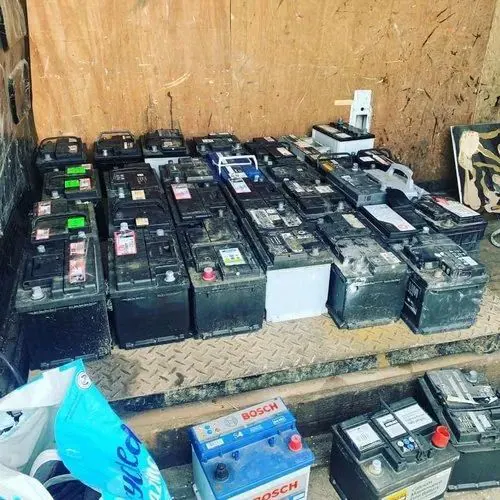
Understanding the exact chemical variations within your backup room is the first step of Used UPS Battery Recycling. Lead-acid arrays, gel-based cells, and lithium variants present unique transport handling challenges. Separating these streams ensures your facility avoids dangerous terminal fires during mass structural extraction phases.
UPS Battery Recycling Services: Details and Alloy Classification
Reclaiming prime value from backup system overhauls requires an explicit understanding of metallurgical categories. Scrap buyers weigh and grade lots based on the purity of the underlying lead grids and secondary polypropylene casings. Throwing high-grade Valve Regulated Lead Acid (VRLA) cells into a general trash pile allows local scrap dealers to apply flat, undervalued baseline rates across your entire inventory.
To avoid capital loss, procurement offices must track standard Lead Acid Battery Recycling values alongside real-time market movements. Separating pure SMF Battery Recycling units from liquid tubular cells protects your recovery returns, enabling finance departments to log accurate balance-sheet offsets that offset net infrastructure updates.
Subtopic Evaluation: VRLA and SMF Asset Grading
Industrial backup blocks are heavily valued for their dense lead content. During UPS Battery Recycling operations, these grids are extracted and cleaned through multi-stage furnaces. Keeping your battery housings un-cracked protects the pure chemical elements inside, directly increasing the total buyback return of your batch at the scale.
| Battery Technology Grade | Core Chemical Metrics | Optimal Disposal Window | Primary Value Recovery Channel |
|---|---|---|---|
| VRLA / SLA Blocks | Lead dioxide, gelled acid matrices | 3 - 5 Years from installation | Certified Commercial UPS Battery Recycling Loops |
| SMF Battery Systems | Absorbent Glass Mat (AGM) setups | 4 - 6 Years from installation | Industrial Material Value Recovery Buybacks |
| Tubular Energy Cells | Liquid electrolyte, thick lead plates | 5 - 7 Years from installation | Direct Smelting Furnaces / Chemical Refining |
| Lithium UPS Packs | Lithium iron phosphate (LiFePO4) | 8 - 12 Years from installation | Specialized Secondary Rare Earth Hydrometallurgy |
UPS Battery Recycling Process and Value Recovery Benefits
Maintaining clear transaction logs across large corporate parks calls for following a predictable, multi-tier processing workflow that tracks exactly with our UPS Battery Recycling 2026 – Complete Guide parameters:
Step 1: On-Site Electrical Isolation
Engineering teams isolate battery strings from main distribution units, using specialized insulated gear to eliminate short-circuit risks or arcing during bulk removals.
Step 2: Structural Integrity Assessment
Every backup module undergoes physical inspection to spot exterior casing cracks early. Damaged modules are isolated in acid-neutralizing dry containment wrap.
Step 3: Inventory Database Update
Technical data tags, total cell counts, weights, and metallurgy types are carefully logged into master asset sheets to preserve complete compliance files.
Step 4: Acid-Proof Palletized Loading
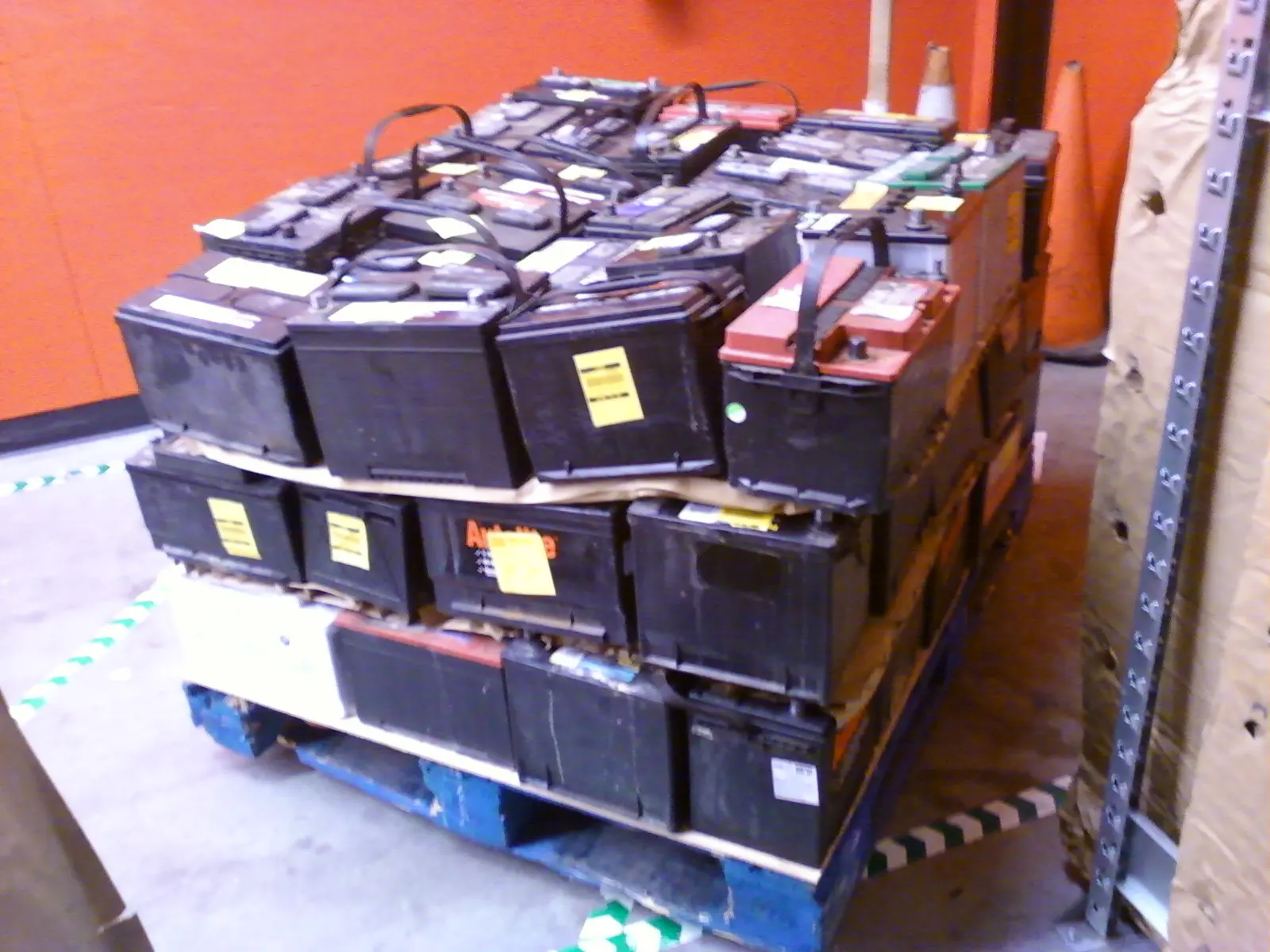
Spent cells are loaded onto heavy non-conductive pallets layered with acid-resistant tracking pads to shield transportation machinery during long-haul transit.
Step 5: Calibrated Weight Verification
Cargo travels through certified digital scales to output unalterable manifest documents before raw automated chemical recovery and smelting cycles begin.
UPS Battery Recycling Costs, Dynamic Pricing, and ROI Metrics
The net expenditure profile of a commercial power disposal project depends on several key variables: total cell tonnage, chemical core composition, transport distances, and specialized logistics needs. Committing your operations team to structured Battery Waste Management pathways reduces handling overheads and maximizes recovery revenue.
To evaluate your true return on investment, operations groups match current lead commodity index boards against localized site clearance costs. Partnering with a professional, asset-backed company offsets labor fees through direct component buyback credits, ensuring your complex infrastructure transition delivers a clean financial return.
| Processing Cost Factor | Typical Budget Impact | Mitigation Strategy | Target Operational Outcome |
|---|---|---|---|
| Reverse Logistics Freight | Dependent on distance and volume | Consolidate lots into single bulk collections | Reduced freight fees per kilogram |
| Hazardous Packing Containment | Acid-proof container material fees | Partner with full-service ITAD vendors | Elimination of secondary material asset fees |
| Chemical Neutralization | Labor charges for leaking casings | Deploy preventative testing parameters | Zero structural safety penalty charges |
| Compliance Audit Reporting | Documentation and manifest processing | Choose direct KSPCB certified networks | Flawless annual corporate audit completion |
UPS Battery Recycling in Bangalore and South India Hubs
Navigating commercial facility requirements across major technology hubs demands clear local compliance mapping. Throughout localized business corridors—including Whitefield, Electronic City, and major IT parks—the Karnataka State Pollution Control Board (KSPCB) strictly enforces environmental safety criteria.
To maintain flawless operations, leading enterprises establish direct service loops with licensed regional extraction networks. Extending your corporate compliance mapping across South Indian operational tracks—including Karnataka, Tamil Nadu, Telangana, Kerala, and Andhra Pradesh—insulates your company from tracking discrepancies and protects your public environmental credentials.
Subtopic Evaluation: South India Local SEO Footprints
Industrial backup disposal requires localized transport execution that accounts for tight municipal border rules and hazardous material crossing laws. Securing a partner with unified regional coverage ensures your spent power lots flow smoothly from distributed backup hubs to centralized, authorized reclamation plants without logistical bottlenecks.
UPS Battery Recycling Compliance, EPR Targets, and Battery Waste Rules
Executing an intensive facility teardown requires strict alignment with national hazardous materials frameworks. Throwing bulk corporate electronics or backup cells into general scrap bins is a serious legal violation. True statutory protection requires routing items exclusively through CPCB authorized treatment networks.
Fulfilling Extended Producer Responsibility (EPR) metrics under the Battery Waste Management Rules, 2022, is an essential benchmark for modern business operations. Documenting every transaction with official state receipts provides verified tracking logs for your corporate governance files, satisfying international ESG criteria and supporting clear circular-economy workplace models.
UPS Battery Recycling FAQs
How can businesses satisfy the UPS Battery Recycling 2026 – Complete Guide compliance rules?
What specific materials are recovered during the UPS Battery Recycling process?
What are the primary hazards associated with improper UPS Battery Disposal?
Which backup cell technologies are covered under modern UPS Battery Recycling programs?
How is the industrial value of a used UPS battery lot calculated?
Can our business arrange bulk collection for Used UPS Battery Recycling across multiple cities?
What document proves that an enterprise fulfilled its UPS Battery Disposal legal duties?
How does the circular economy apply to modern industrial battery recycling?
What steps prevent terminal short-circuits during mass battery decommissioning?
Why should corporate facility managers avoid un-licensed battery scrap dealers?
Strategic Workspace Sustainability Insights
Contact Urban Eco Recyclers
Address: Site No. 8K, No. 1092/8/78/79, Ground Floor, 1st 'B' Main Road, A&T Junction, Janatha Colony, Dodda Kannelli, Varthur Hobli, Bengaluru – 560036
Phone:+91 91872 40457
Email:ewastescrap.blr@gmail.com
Hours:Monday – Sunday, 24/7 Support
© Urban Eco Recyclers, Bengaluru · Hazardous Material Disposal · Reverse Logistics · Authorized Battery Recycling Programs